The hidden compound shaping bitterness, roast behavior, antioxidant value, and business decisions
Coffee professionals talk constantly about acidity, sweetness, roast development, body, and origin character. Yet one of the most important compounds behind all of those conversations is often left in the background: chlorogenic acid, usually discussed in the plural as chlorogenic acids (CGAs).
That matters because CGAs sit at the intersection of chemistry, sensory quality, roasting control, shelf life, and even commercial positioning. They influence how green coffee behaves during roasting, how brewed coffee expresses bitterness and astringency, how light or dark roast profiles differ chemically, and how people talk about coffee’s “health” story. In practical terms, if you buy green coffee, roast coffee, cup coffee, sell coffee, or train baristas, chlorogenic acids are already affecting your results whether you measure them or not.
For Ethiopia, this topic is especially important. Ethiopia’s competitive strength is built on Arabica diversity, origin identity, processing variation, and increasing interest in value addition. But value addition is not only branding and packaging. It is also understanding the chemistry that supports quality decisions. Regional differences in Ethiopian Arabica have already been shown to include differences in chlorogenic acid content, meaning CGAs are part of the technical fingerprint of origin and potentially part of how we understand roasting and market positioning more precisely.
What chlorogenic acid actually is
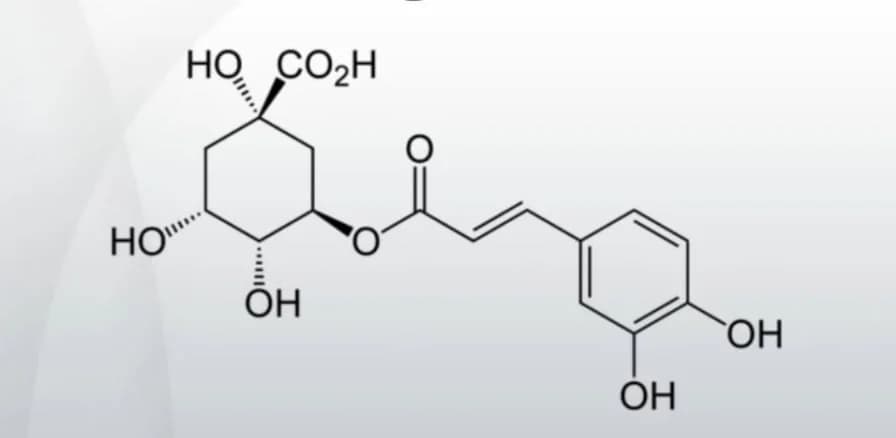
Chlorogenic acids are a family of polyphenolic esters formed mainly from caffeic acid and quinic acid. In coffee, the dominant compound is 5-O-caffeoylquinic acid (5-CQA), which is the major CGA in green beans. Reviews describe 5-CQA as the most abundant chlorogenic acid in green coffee and note that it represents the majority of total CGAs in the bean.
More from the blog
Keep exploring stories, guides, and coffee-fueled ideas.
This is important because many people casually say “chlorogenic acid” as if it is one single molecule. In reality, coffee contains a group of related CGAs, including caffeoylquinic acids and dicaffeoylquinic acids, and they do not all behave identically during roasting or in sensory perception. Roasting studies show that individual isomers such as 3-CQA, 4-CQA, and 5-CQA transform differently as the roast progresses.
In green coffee, CGAs are among the key native compounds that help define the bean’s chemical potential before roasting. They are not “flavor” in the simple sense of tasting like lemon or apple. Instead, they are precursors and structural contributors to what the cup can become after roasting. They influence bitterness, astringency, acidity perception, antioxidant behavior, and the formation of degradation products such as quinic acid and caffeic derivatives during roasting.
Why chlorogenic acids matter scientifically
1. They are major coffee phenolics
CGAs are among the most abundant phenolic compounds in coffee, especially in green coffee. Green coffee is widely recognized as one of the richest dietary sources of these compounds.
2. They change dramatically during roasting
As roasting proceeds, total CGAs generally decline, but that decline is not linear or chemically simple. Some isomerization happens before larger degradation phases. In Arabica, studies have observed isomerization of caffeoylquinic acids between the end of drying and the crack phase, followed by further degradation as roasting advances.
3. They affect cup structure, not just “health”
CGAs are often discussed only in wellness marketing because green coffee extract became popular in supplement culture. That is too narrow. In coffee quality work, CGAs matter because they contribute to bitterness, astringency, tactile effects, and roast-derived flavor development. A 2023 sensory study even found that two chlorogenic acid isomers, 3-CQA and 4-CQA, contributed to a mouthcoating sensation in coffee.
4. They are linked to species and origin differences
Robusta generally trends higher in chlorogenic acids than Arabica, which helps explain some of the harsher bitterness and stronger phenolic impression often associated with Robusta cups. Within Arabica, origin and growing environment also matter. Ethiopian studies have shown meaningful zone-level variation in CGA concentration.
Chlorogenic acids across the roasting process
For roasters, this is where the topic becomes operational.
In green coffee, CGAs are relatively high. As heat is applied, several things happen:
some CGAs isomerize into different forms
total CGA concentration declines with increased roast degree
degradation products rise, including compounds linked to bitterness and harsher acidity perception
the balance between preserved origin character and roast development shifts
The common practical pattern is this:
lighter roasts preserve more chlorogenic acids, while darker roasts destroy more of them. That sounds straightforward, but the sensory result is more complicated than “more CGA = more acidity” or “less CGA = better taste.” Research on brewed coffee shows that perceived acidity cannot be reduced to one acid alone, and individual acid concentrations do not map neatly onto what tasters report.
This is a critical lesson for roasters in Ethiopia and elsewhere. When a light roast tastes sharp, woody, or aggressively bitter, the answer is not simply “it has more acid.” It may reflect a combination of:
higher residual CGAs
incomplete caramelization and sugar transformation
insufficient development
brew recipe issues
green coffee maturity or processing effects
So CGAs are important, but they are part of a system, not a single-cause explanation
Sensory impact bitterness, astringency, and tactile feel
In industry training, one of the biggest mistakes is to talk about chlorogenic acids only as “healthy antioxidants.” For coffee professionals, their more immediate importance is sensory.
CGAs and their roast degradation products are associated with:
bitterness
astringency
mouthcoating
part of the broader perception people loosely call “acidity” or “brightness,” though not in a simple one-to-one way
This matters in cupping. A sample may score clean and bright but still show a slightly drying finish. Another may have strong structure but feel rough at the back palate. Those sensations are not explained by one metric alone, yet CGA composition is part of that tactile and bitter architecture.
A practical roasting example:
A washed Ethiopian coffee from high elevation may present floral aromatics and citrus-like acidity in a light roast, but if the roast is too short through Maillard and underdeveloped after first crack, the cup can become thin, grassy, and slightly aggressive. Part of that impression can come from insufficient conversion of key precursors, including chlorogenic acid pathways. On the other hand, pushing the coffee too dark may reduce CGAs further but also flatten florals and replace origin expression with generic roastiness. The job of the roaster is not to maximize or minimize CGA blindly. It is to manage transformation intelligently.
Industry application
For green buyers
CGAs can be part of the biochemical profile that helps explain why two coffees with similar screen size and moisture behave differently in roasting. A buyer may not test CGAs routinely, but should understand that variety, origin, altitude, and environment can shift biochemical composition and therefore roast response.
For roasters
CGAs are relevant when designing profiles for:
light roast filter lines
espresso blends needing controlled bitterness
high-density washed Ethiopians
naturals where fruit expression can be masked by harsh phenolics if roasting is poorly managed
A useful mindset is to treat CGA behavior as part of development strategy:
too little development: sharper, greener, more aggressive structure
too much development: lower preserved CGA, but also reduced origin clarity and increased roast dominance
For cuppers and QC teams
When evaluating bitterness, drying finish, or tactile roughness, QC teams should avoid simplistic language. Instead of saying “this coffee is acidic,” it is better to separate:
bright acidity
sour underdevelopment
phenolic bitterness
drying astringency
mouthcoating body
That sensory precision leads to better roast adjustments.
For cafés
Baristas often inherit roast problems and try to solve them at the espresso machine. But if a coffee has a harsh chlorogenic/quinic bitterness structure from roast chemistry, recipe adjustment can only do so much. Training should help baristas distinguish between:
extraction-caused bitterness
roast-caused bitterness
origin-structured bitterness
That reduces confusion in café operations.
Common mistakes
Mistake 1 Equating chlorogenic acid with pleasant acidity
Not correct. CGAs are not simply the reason a coffee tastes bright or fruity. Perceived acidity in coffee is a more complex multisensory result.
Mistake 2 Assuming dark roast always improves quality because it lowers CGAs
Lower CGAs do not automatically mean better coffee. Darker roasting can reduce certain bitter precursors but also erase florals, origin distinction, and sweetness complexity.
Mistake 3 Using health claims carelessly
Coffee does contain CGAs with antioxidant relevance, but businesses should avoid turning this into exaggerated wellness marketing. The more professional approach is to mention coffee’s polyphenol content carefully and focus on quality plus transparency.
Mistake 4 Ignoring green chemistry in roast troubleshooting
If a coffee behaves strangely, not every problem is profile design. Some lots begin with very different chemical starting points.
Mistake 5 Treating all bitterness as extraction error
Some bitterness is brew error. Some is roast chemistry. Some is inherent lot structure. Good QC separates them.
Practical recommendations
For coffee businesses, here is the practical path
Build chemical awareness into roast training
Your roasting team does not need a full analytical lab to benefit. They do need to understand that compounds like CGAs change during roasting and affect bitterness, astringency, and body.
Pair sensory notes with roast data
Track color, weight loss, development time, and cupping descriptors together. Over time, patterns in bitterness and dryness will become clearer.
Use lighter roasts carefully
Light roast can showcase beautifully, but only when development is controlled. Preserving more CGAs is not automatically a quality win.
Support research-linked origin storytelling
Where possible, connect region, chemistry, and sensory narrative. origin marketing becomes stronger when it is grounded in real compositional differences rather than only romantic language.
Explore deeper QC in advanced operations
Larger exporters, premium roasters, and training centers should begin thinking beyond moisture and defect count alone. Biochemical profiling, even if occasional, can become a valuable future differentiator.
conclusion
Chlorogenic acid is not a side topic. It is one of the hidden structural compounds that helps explain why coffee tastes the way it does, why roast levels behave differently, why some cups feel drying or mouthcoating, and why Arabica and Robusta diverge in character. It also helps connect green chemistry to roast control, sensory evaluation to business quality, and origin science to market differentiation.
For Ethiopia, this matters even more. The country’s future in coffee will not be secured by origin reputation alone. It will be secured by turning origin reputation into technical advantage, better roasting, better QC, stronger local value addition, and more credible education. Chlorogenic acids are one small part of that bigger system, but they are a powerful example of what modern coffee must do next: move from storytelling alone to storytelling backed by science
Comments (0)
No comments yet. Be the first to share your thoughts.
Comments (0)
No comments yet. Be the first to share your thoughts.