Coffee cherry health is critical for both yield and quality in coffee production. Healthy cherries ripen evenly and contain well-developed beans, which translates to better cupping scores and higher income for farmers. Conversely, pests, diseases, and environmental stresses can wreak havoc on a coffee crop – in extreme cases, diseases like Coffee Berry Disease (CBD) have caused 70–80% crop loss when left uncontrolledbaristahustle.com. Smallholder farmers, who often rely on coffee as a cash crop, are especially vulnerable to these threats. This blog post will help you recognize common problems affecting coffee cherries (using a real example of early-stage black spots and uneven ripening on cherries), understand their causes, and take action to prevent or manage them. The tone is informative and accessible, with practical tips and visual cues (e.g. “look for dark sunken spots”, “cut open the cherry to check for brown pulp”) to guide you in the field.
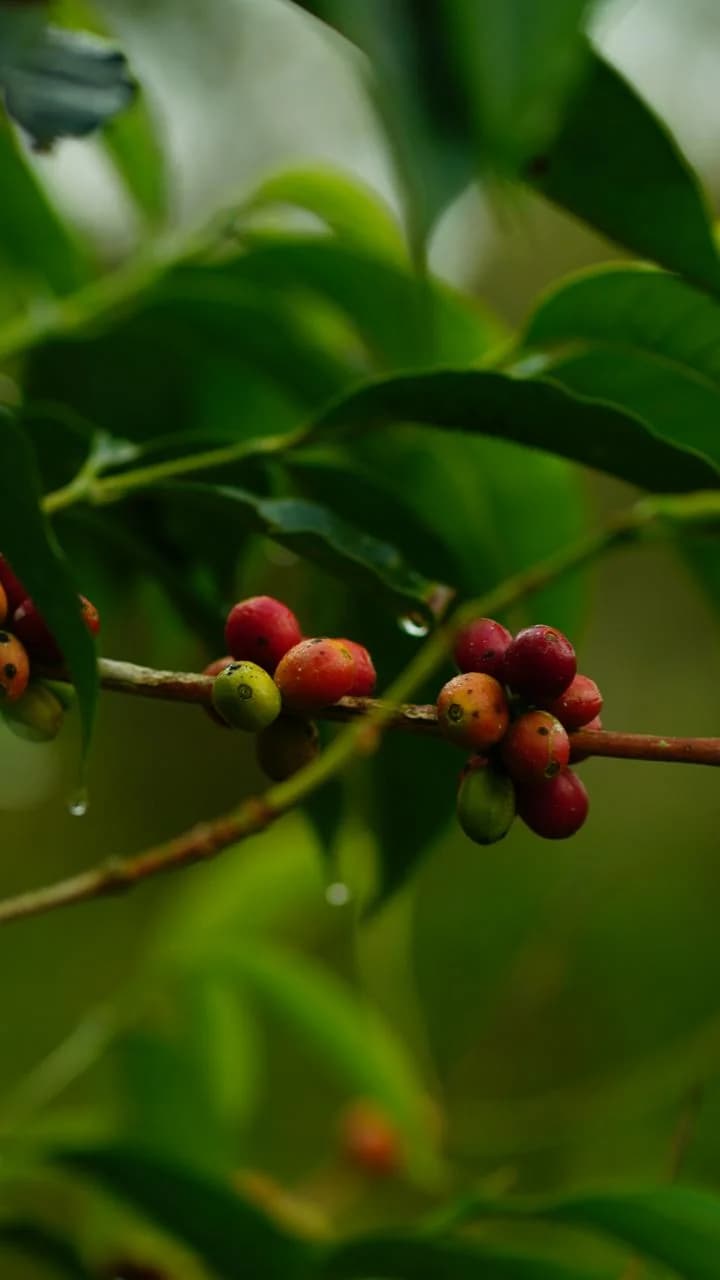
(Suggested photo: Close-up of coffee tree branch with both healthy red cherries and some diseased cherries showing black spots or uneven color, to illustrate the contrast.)
Common Visible Symptoms and What They Indicate
Early detection of problems in coffee cherries is possible by observing visible symptoms. Here are some common signs on the cherries and what they typically mean:
Dark Spots on Green Cherries: Small black or brown spots on unripe green cherries are often a sign of fungal infection. For example, Coffee Berry Disease starts as
More from the blog
Keep exploring stories, guides, and coffee-fueled ideas.
water-soaked specks that rapidly turn dark and sunken
Uneven or Premature Ripening: If some cherries on the same branch are ripening too early (turning soft black or red while others remain green), it can indicate stress or disease. Fungal infections like Cercospora berry blotch cause infected cherries to ripen prematurely and darken in colorctahr.hawaii.edu. These fruits often shrivel and may remain attached as light, dry “raisins.” Environmental stresses can also lead to uneven ripening – for instance, a drought right after flowering can cause some berries to develop slowly or irregularly, leading to uneven maturationebrucoffeeco.com. In the example of the photo provided, cherries with early black spotting and partial ripening could be suffering from a mix of fungal attack and climate stress (more on causes below).
Small Holes in Cherries:Pinholes or perfectly round small holes in the cherry’s skin are a telltale sign of insect damage, most commonly the coffee berry borer beetle. This tiny beetle burrows into the cherry (usually through the disc on the tip) and lives inside the fruit, eating the bean. A visible entry or exit hole about 1 mm wide on the cherry’s end means the borer is presentroyalcoffee.com. You might also see fine brown dust (frass) around the hole. Cherries infested by borers often ripen prematurely, dry up, or fall off the tree. (If you cut open such a cherry, you may find tunnels in the beans or the beetle itself inside.)
Sunken Lesions on Ripe Cherries: Dark, sunken spots on red cherries usually indicate a severe stage of fungal disease. For example, CBD can affect ripening berries in a “brown blight” phase that creates sunken black patches on red cherriesinfonet-biovision.org. These lesions often envelop a large portion of the cherry’s surface and cause the pulp and bean to rot. Ripe cherries with sunken black areas will likely yield defective beans if processed, so identifying this early is key.
Black Sooty Coating or Mold: A charcoal-like black coating on cherries (and leaves) is usually sooty mold, which grows on the sugary honeydew excreted by sap-sucking insects like scale insects or mealybugs. While the mold itself doesn’t attack the cherry, it’s a sign that an infestation of scales/aphids is present on the plant. Sooty mold can block sunlight and affect photosynthesis, indirectly stressing the plant. If you see black sticky soot on coffee cherry skin, inspect the undersides of leaves and branches for clusters of scale insects or white cottony mealybugs.
Yellow, Wilting Leaves and Cherry Drop: Though primarily a leaf symptom, widespread yellowing (e.g. from Coffee Leaf Rust or nutrient deficiencies) can weaken the coffee tree. When a tree has lost a lot of foliage or is unhealthy, it may drop its developing cherries or fail to fill them properly. For instance, severe leaf rust infection can lead to defoliation and subsequent poor berry development or shedding. If you notice many cherries dropping to the ground while still green, consider both disease and environmental causes (root problems, drought, etc.). Always check the dropped cherries for clues: do they have holes (borer)? Black spots (disease)? Or are they small and empty (possibly drought or poor pollination)?
In summary, visible symptoms like spots, holes, discoloration, and abnormal ripening are important clues. Paying attention to these signs can help narrow down whether the culprit is an insect pest, a fungus, or an environmental factor. Next, we’ll discuss the key causes in each category.
(Suggested photo/diagram: A side-by-side comparison of healthy green coffee cherries vs. ones with disease spots and insect holes, with labels pointing out the “dark sunken spot” and “borer hole” as examples of symptoms.)
Key Causes of Coffee Cherry Problems
Problems in coffee cherries generally stem from three main categories of causes: insect pests, fungal diseases, and environmental stresses. Often these factors can interact (for example, pests wounding fruit and allowing fungi to enter, or weather stress making trees more susceptible). Let’s break down each category and how they relate to symptoms:
Insect Pests
Many insects are attracted to coffee plants and can directly damage the cherries:
Coffee Berry Borer (Hypothenemus hampei): This is one of the most destructive coffee pests worldwide. The tiny black beetle bores into the coffee cherry and lays eggs inside, and its larvae feed on the coffee bean. A heavy infestation can attack 50–100% of the berries on a farm if no control measures are takencoffeehunter.com, causing cherries to fall and reducing both bean quality and weight. Signs: Look for those small round holes on the cherry (especially on the end opposite the stem). In the early stages, the cherry may look intact except for the pinhole; over time, it might develop a yellowish discoloration or dry up. If you cut open an infested cherry, you’ll often find tunnels in the parchment and damage to the seed, along with the borer or its white grubs. Impacts: Borer-damaged beans become “full black” or “partial black” defects once processed, with a shriveled appearance and off-flavors, and they can render the coffee unsellable as specialty grade. Management: This pest lives its entire life cycle inside the fruit, which makes control challenging. Key strategies include thorough harvesting and field sanitation (collecting all leftover berries on the tree and ground after harvest to break the lifecycle)coffeehunter.com, using traps and lures to catch adult beetles, and applying biological controls like the fungus Beauveria bassiana (which infects and kills the borer). We’ll cover more on control later, but know that vigilance against the coffee berry borer is crucial in any coffee farm.
Antestia Bug (Antestiopsis spp., “Variegated Coffee Bug”): A major insect pest in East African coffee regions, this is a shield-shaped stink bug that feeds on coffee flower buds, leaves, and cherries. The adult is about 6–8 mm with distinctive orange, white, and dark markingsinfonet-biovision.org. Damage mechanism: Both adults and nymphs pierce green cherries and suck sap, causing the beans inside to develop necrosis. Even more problematic, the bug transmits a fungus (Nematospora) into the cherry, which causes the coffee beans to rot from insideinfonet-biovision.org. Interestingly, the outside of the cherry may not show obvious scars at first – farmers often only discover the damage at processing, when affected beans come out malformed or with brown/black streaks (sometimes called “zebra beans”). Over time, heavy feeding can also cause uneven ripening or dead spots on the fruit skin. Impacts: Antestia bugs can significantly reduce yield – an infestation has been noted to cause up to 30–40% crop loss on heavily infested treesperfectdailygrind.comacademy.naturland.org. Moreover, their feeding is linked to the infamous “potato taste defect” (PTD) in East African coffees: the bug’s puncture allows bacteria into the bean, leading to a raw potato-like odor in the roasted coffeeperfectdailygrind.comperfectdailygrind.com. Signs: You might see the bugs themselves if you inspect in the early morning or dusk – they often hide in clusters of berries or under leaves during midday heatacademy.naturland.org. Another clue is the presence of dark, shiny excreta spots on leaves or cherries if the bugs have been feeding there. If you suspect antestia, try lightly shaking a branch over a sheet; the disturbed bugs may fall or fly, making them easier to spot. Note: Because these bugs don’t always leave obvious surface damage, farmers must rely on regular scouting for the insects.
An adult Antestia bug feeding on a coffee cherry. These insects inject a fungus into the fruit, causing hidden damage to the beansinfonet-biovision.org. They also produce a distinctive musty odor when handled (as a defense mechanism).
Other Insect Pests: Several other pests can attack coffee cherries or the plant and indirectly affect cherry health:
Coffee Berry Moth (Prophantis smaragdina) – a caterpillar that bores into and feeds on the pulp of cherries, causing premature drop. It's more localized in some regions and often controlled by natural predators.
Scale Insects and Mealybugs – these suck sap from branches and fruit stems. While they don’t bore into the cherry, a severe infestation can weaken the plant and cause cherries to wilt or drop. Plus, as noted earlier, their honeydew leads to sooty mold which can coat cherries in black fungus.
Thrips – tiny winged insects that rasp the surface of leaves and sometimes young fruit. Thrip damage on coffee berries appears as rough, silvery patches on the skin with black specks of excrementfacebook.com. This can cause the cherry skin to scar; heavy infestations may deform berries or cause them to dry.
Fruit Puncture Bugs (common in some regions) – like certain leaf-footed bugs or shield bugs other than antestia, these can pierce ripe coffee cherries to suck juices. They often cause sunken dark spots at the feeding site and can introduce fungi or bacteria, similar to antestia. A sign of their activity is cherries with a single black puncture mark that then ferment on the tree.
Each insect pest has its own life cycle and preferred environment, but a common theme is that insects often exploit weak links in farm management. Poor sanitation (leftover berries) invites borers; excess bushy growth invites antestia and scales to hide; lack of monitoring lets infestations build up. An integrated pest management approach – combining regular monitoring, cultural practices, and targeted controls – is the best way to minimize insect damage.
Fungal Diseases
Fungal pathogens are responsible for many of the most conspicuous and damaging diseases of coffee cherries. They tend to thrive in humid, warm conditions and in dense, shady plantings where moisture lingers. Here are key diseases to know:
Coffee Berry Disease (CBD): Caused by the fungus Colletotrichum kahawae, CBD is a serious disease unique to Africa (especially East and Central Africa at higher altitudes). It is also called coffee anthracnose or brown blight. Symptoms: On young green berries, CBD causes small dark, sunken spots that enlarge and turn black, often with a slightly depressed centerinfonet-biovision.org. Infected cherries exhibit a progressive blackening – farmers often first notice one or two black, shriveled berries on a cluster, after which many others may become infected during wet weather. Under very humid conditions, you might see pinkish-orange spore masses on the lesion surface (this is the fungus sporulating). Affected berries typically rot and drop from the branch prematurely, which is a hallmark of CBDinfonet-biovision.org. It can also infect ripening/red cherries, causing a dark brown blight on them. If you cut open an infected young cherry, the inner pulp is brown or black and hard; in fact, the fungus often makes the pulp desiccated and brittle inside, while the outside may remain relatively smoothen.wikipedia.org. Impact: This disease can be devastating – in epidemic conditions (continuous rains, susceptible varieties, no fungicide use) farmers have seen up to 80–90% of their coffee cherries destroyed by CBDbaristahustle.comnature.com. It does not kill the tree itself, but the yield loss can ruin a harvest. Conditions: CBD flourishes in cool, wet, humid environments. Elevations above ~1,000 m with frequent rain are high-risk. Optimal temperatures for the fungus are around 20°C (68°F)greenlife.co.ke, and spores spread by rain-splash from infected to healthy berries. Geographic note: Fortunately, CBD has not spread outside Africa (quarantine measures are in place in Latin America and Asia to keep it out). For African farmers, planting resistant varieties (like Kenya’s Ruiru 11 or Batian) and timely fungicide sprays are common control measures (discussed later).
Cercospora (Brown Eye Spot and Berry Blotch): Another fungal disease, caused by Cercospora coffeicola, which affects both leaves and cherries. On leaves it produces the classic “brown eye spot” – round brown lesions with gray centers and yellow halos. On berries, it causes what’s known as Cercospora berry blotch. Symptoms on cherries: Initially, you’ll see brown, slightly sunken patches on the green cherries, often irregular or oval in shape, sometimes with a purplish margin. As the infection progresses, the spots can expand and turn dark brown or black with a dry, ashy gray centerctahr.hawaii.edu. Unlike CBD, Cercospora usually doesn’t consume the entire cherry; instead, it might cause a portion of the cherry to blacken or the cherry to ripen unevenly. One notable effect is premature ripening – infected cherries may start to redden or ripen on one side while the other side remains green, or they may turn reddish-brown and drop earlyctahr.hawaii.edu. Farmers sometimes notice one odd ripe cherry on a branch weeks before normal ripening; this can be due to Cercospora infection forcing it to ripen. These diseased cherries often have poor-quality beans and, if left on the tree, become entry points for secondary invaders (like other fungi or bacteria). Conditions: Cercospora thrives in warm, humid conditions as well, and especially where coffee plants are under stress (poor nutrition or drought can predispose plants to it). It’s often seen in lower elevations or drier areas than CBD, but also appears in tandem with other diseases. Management: Adequate fertilization (particularly nitrogen and potassium) has been shown to reduce Cercospora severity, as healthy leaves are more resistant
Anthracnose (Secondary): The term “anthracnose” in coffee often refers to generalized fungal rot caused by Colletotrichum species. Apart from CBD’s specific strain, there are ubiquitous strains (like C. gloeosporioides) that can infect damaged or overripe cherries. For example, if cherries are physically damaged (by insect, hail, or other disease), Colletotrichum can invade the wound and create a soft, brown rot. This often happens on cherries that are overripe or those already affected by Cercospora (as noted by researchers, C. gloeosporioides commonly invades cherries first weakened by Cercospora, complicating diagnosisctahr.hawaii.edu). Symptoms: Black, sunken, expanding decay on any part of the cherry (often starting at an injury point). In wet weather, salmon-pink spore masses might form on the rotted area. The cherry eventually blackens and mummifies on the branch or falls off. Management: Similar to other fungal issues – remove and destroy infected cherries, maintain tree vigor, and keep the farm floor clean (mummified cherries can harbor spores).
Coffee Leaf Rust (Hemileia vastatrix): While rust is a leaf disease and doesn’t infect cherries directly, it’s worth mentioning because a severe rust outbreak will weaken the tree and reduce the number and size of cherries. Rust appears as yellow-orange powdery spots on the underside of leaves, causing them to drop. In terms of cherry health, a rust-stricken tree may not have enough foliage to nourish developing berries, leading to poor fill (lightweight “shell” or “quaker” beans)perfectdailygrind.com or increased droppings. If your farm is in a rust-prone area, controlling rust is integral to overall cherry health.
Other Diseases: There are a few other diseases that can impact cherries:
Phoma (Coffee Berry Dry Rot) – causes dark brown lesions and a dry rot of cherries, sometimes seen in high humidity after insect damage.
Fusarium/Fusarium Wilt – a vascular disease that kills coffee trees; not a cherry disease per se, but infected trees will wilt and cherries will die and blacken on the branches due to lack of water.
Root Rot (Armillaria or others) – again, affects the tree roots; cherries on an affected tree may suddenly shrivel en masse if the roots are compromised.
In general, fungal diseases in coffee are promoted by moisture. High rainfall, heavy dew, poor air circulation, and unpruned canopies all create an environment where spores germinate and infect cherries. Many fungal diseases also carry over on old infected material – for example, dried infected berries (“raisins”) left on the tree or ground will release spores in the next wet season. That’s why field sanitation (removing diseased cherries and pruning) is a recurring theme in managing coffee diseases.
(Suggested photo: An image of green coffee cherries with black, sunken lesions from CBD, perhaps showing a pink spore mass on one – to help farmers visually identify this fungal disease.)
How to Diagnose Issues in the Field
Correctly diagnosing the problem affecting your coffee cherries is half the battle. Here are some practical steps and tips for field diagnosis of coffee cherry health issues:
Inspect Regularly and Closely: Make it a habit to walk through your coffee farm frequently, especially during critical times (after flowering, during fruit development, and before harvest). Look at the cherries up close. It helps to pick a few suspicious cherries and physically examine them. Use a hand lens or magnifying glass if you have one – many pests and early lesions are easier to see magnified.
Observe the Pattern: Ask yourself, “How is the problem distributed?” If you see a cluster of affected cherries in one area of the farm or on one part of the tree, that can be a clue. For example, low-down branches with cherries touching the soil getting black rot might indicate a soil fungus splash. Upper canopy cherries decaying might point to wind or rain exposure spreading spores from above. Scattered holes in cherries throughout the farm indicate a mobile pest like the borer (which flies) rather than a localized soil issue. Also, note if the problem is worse in the dense, shaded part of your plot – that often suggests a fungus (thriving in humidity) – or if it’s along the edges – perhaps insects coming in or wind damage.
Identify the Symptoms in Detail: Use the guide from the previous section on symptoms:
Are the spots on cherries raised or sunken? (Sunken, dark necrotic spots scream “fungus”infonet-biovision.org; raised bumps might be something like insect eggs or galls.)
What color and texture? (Water-soaked or oily dark spots could be early disease; a dry, scab-like patch might be an old Cercospora lesion; a shiny black spot could even be dried insect frass.)
Any visible fungus? Powdery white growth, pink masses, or gray mold on a cherry all indicate fungal presence. For instance, a pink crust on a black spot is characteristic of CBD sporulationhawaiicoffeeed.com.
Any insects present? Gently turn leaves and look under them for bugs, tap branches to see if anything flies out. Sometimes you’ll find the culprits: scale insects clinging to nodes, a colony of ants (often farming aphids or scales), or even borer beetles (they’re tiny, but under bark or near cherry stem you might see a black speck that moves).
Cut Open Some Cherries: This is a crucial diagnostic step. Using a knife or even your fingernails, break open a few affected cherries and examine the inside:
Look at the Beans: Are they developing normally, or are they discolored? Two pale beans is normal for an unripe cherry. If one or both beans are brown or black, something is wrong. Dry, brown, brittle beans that are undeveloped could indicate CBD – the fungus can cause the bean to die and dry up insideen.wikipedia.org. Tunneling or holes in the beans (along with brown dust) means insects (likely borers). Oozing or fermenting smell inside might mean bacterial/fungal rot (possibly entered through an insect wound).
Check the Pulp: Healthy pulp is white-green and firm in unripe cherries, and soft and red in ripe ones. If the pulp is slimy, discolored, or has a foul smell, it could be fermenting due to overripe conditions or microbe invasion. A brown or black pulp with no insect present points to fungal infection. Sometimes with Antestia bug damage, the pulp and beans will have a mottled brown appearance and may emit an unusual odor (which correlates to the potato taste defect).
One tip: Sniff the opened cherry. A healthy cherry smells fresh or like nothing much. A diseased one might smell sour or moldy. An antestia-bug-damaged bean, when roasted, gives off a raw potato smell, but in the field you might not detect it unless it’s severe – however, if you sense anything off, note it.
Use Traps or Indicators if needed: For very small or nocturnal pests, you might use traps to diagnose their presence. For example, you can set out a simple homemade alcohol trap to catch coffee berry borers (a bottle with ethanol lure) – if you start catching borers, you know they are active even if you haven’t seen holes yet. Likewise, yellow sticky traps can catch flying insects like leaf miners or thrips and reveal their presence. Pheromone traps exist for some pests (like CBB) to monitor their population.
Differentiate Environmental Factors: If no obvious pests or disease signs are found on the cherries, consider if the issue is environmental or nutritional:
Drought or Lack of Nutrients: If cherries are uniformly small, or many are empty (a condition called “floaters” where beans are very light), the tree may have experienced drought or poor feeding during berry fill. Also, are leaves small or yellow (nutrient deficiency) or are leaf edges burnt (maybe fertilizer burn or drought)? These clues point away from biotic causes.
Sun Scorch or Frost: Check if damaged cherries are mostly on the side of the tree facing the afternoon sun – a sudden exposure (e.g., if shade trees were pruned heavily) can sun-scald cherries, causing brown, dry patches on their exposed side. Frost damage, on the other hand, tends to blacken new growth and very young cherries uniformly (frost can kill developing berries, turning them black and hard, sometimes still attached)royalcoffee.com.
Rain Damage: Heavy unseasonal rain during harvest can cause ripe cherries to split open (look for longitudinal cracks in the skin) or ferment on the treeperfectdailygrind.comperfectdailygrind.com. If you see a lot of split ripe cherries after a big rain, that’s likely the cause – not a pest or pathogen, but a weather event.
Take Note of Timing: When did the problem start? A flush of black spots after a week of constant rain suggests disease. A sudden onset of holes at the start of the dry season might suggest borer emergence (as berries dry, borers leave and new ones infest remaining berries). A problem that appears year after year around the same month could be tied to a recurring climate pattern or pest life cycle.
Consult References or Experts: If unsure, it’s wise to compare with trusted sources or seek an agronomist’s help. Agricultural extension bulletins, plant disease field guides, and experienced neighboring farmers can provide insight. For instance, if you have internet access, you might find images of specific coffee diseases (like coffee berry disease vs. cercospora) to compare with what you see. Many countries also have a coffee research institute or extension service where you can send photos or samples for identification.
By carefully combining these observations – visual symptoms, internal examination, farm history, and environmental context – you can diagnose most coffee cherry problems. For example, early-stage black spotting with uneven ripening (our case study scenario) might be diagnosed as follows: small sunken black spots on young cherries (lesions with possible pink spore masses) suggest CBD; some cherries on that branch are also ripening unevenly or prematurely, which could be due to those infections or possibly antestia bug feeding. If you also find a few cherries with tiny holes or see any stink bugs, you might conclude it’s both CBD and some insect activity. In many cases, you may have multiple issues at once – a common situation in farming. Don’t be discouraged: recognizing all contributing factors will help you tackle each one appropriately.
(Suggested diagram: A simple flowchart for diagnosing: e.g., “Spots on cherries? → Sunken and dark = likely fungus; Small round holes = insect borer; No visible marks but cherries dropping = maybe root/environment issue,” etc. Or images of a cherry cut in half to show healthy vs diseased insides.)
Actionable Steps for Smallholder Farmers to Prevent and Treat Problems
Now that we’ve identified the common problems and their causes, let’s focus on practical, actionable steps to prevent and manage these issues. These steps are especially tailored for smallholder farmers working with limited resources:
Maintain Field Sanitation: This is one of the simplest yet most effective practices. After harvest, remove all leftover cherries from the trees – including overripe “raisins” and undeveloped “floaters” – as well as those on the ground. Leaving old infected or borer-infested cherries in the field provides a breeding ground for pests and diseases. For instance, to combat the coffee berry borer, experts recommend “preventive pickings” such that no fruits are left on trees or soil, breaking the pest’s life cyclecoffeehunter.com. Dispose of these fallen or diseased cherries far away (burn, bury, or compost them in a hot pile) so that pests/diseases cannot rebound.
Prune and Mulch for Airflow and Tree Health: Pruning your coffee trees is vital for multiple reasons. Regular and timely pruning (and desuckering) opens up the canopy, reducing humidity inside the tree and making it harder for fungi to spreadinfonet-biovision.org. It also removes the dense foliage that pests like antestia bugs use to hide. After harvest, do a thorough pruning: remove weak, dead, or diseased branches and any excess suckers. Maintain an appropriate shade level – some shade can protect against sunburn and excessive dry stress, but too much shade can trap moisture (a moderate shade of about 30–40% is often a good balance). Using mulch on the soil (e.g., dried leaves, pruned twigs) helps regulate soil moisture and adds organic matter, keeping trees healthier and less stressed by drought. Healthy, vigorous trees can better resist infection and also flush less frequently (which can synchronize ripening, avoiding those multiple flowerings that cause uneven harvest).
Plant Resistant or Tolerant Varieties: Whenever possible, choose coffee varieties that have resistance to known diseases in your region. For example, in areas where Coffee Berry Disease is endemic, planting resistant cultivars like Ruiru 11 or other CBD-resistant hybrids has been a game-changerinfonet-biovision.org. These varieties were bred to withstand CBD and also often carry some leaf rust resistance. Similarly, some hybrids or robusta varieties show better resilience to pests. Check with local coffee research stations for recommended varieties. While switching varieties is a long-term strategy (as it happens during replanting or new planting), it’s one of the most sustainable solutions to disease pressure.
Timely Fungicide Applications (When Necessary): If you’re in a high-disease area (e.g., very wet climate), preventive fungicide sprays can protect your crop. A common practice is spraying a copper-based fungicide just before and during the rainy season to shield against CBD and Cercosporainfonet-biovision.org. Copper oxychloride or copper hydroxide are often used by farmers as a protectant fungicide. In areas with both CBD and Coffee Leaf Rust, farmers alternate copper with other fungicides (like chlorothalonil or systemic fungicides) to cover both diseasesgreenlife.co.ke. Important: Always follow local recommendations for fungicide type, timing, and safety (use proper protective gear and observe pre-harvest intervals). If you prefer organic methods, some options include spraying with biological control agents (like Trichoderma or other antagonistic fungi) or natural products like potassium bicarbonate for mildews. The key is timing – for example, many growers do a “pre-flower” or “pre-rain” spraygreenlife.co.ke because once infections take hold, it’s harder to curtail them. Remember that fungicides are preventive; they work best before the disease spreads widely.
Integrated Pest Management for Insects: Tackle insect pests with a combination of methods:
Monitoring and Traps: Set out pheromone or alcohol traps for coffee berry borer to monitor population. Inspect leaves for eggs of pests. If thresholds are exceeded (for instance, in Tanzania a recommendation is to consider action if you find more than 2–3 antestia bugs per treeinfonet-biovision.org), be ready to act.
Biological Controls: Encourage natural enemies. For antestia bugs, there are tiny parasitic wasps (e.g., Psytalla horrida) that parasitize their eggs – farmers have noticed that wasp-attacked bug eggs turn black, a good sign in the fieldinfonet-biovision.org. While you may not be able to introduce these wasps easily, conserving biodiversity (other plants around, avoiding broad-spectrum insecticides) can help natural predators thrive. For coffee berry borer, the fungus Beauveria bassiana can be applied (it’s commercially available in some places) – it infects and kills the borers. Some farmers also use Beauveria-infected berry traps or sprinkle the fungus on the soil under coffee trees where borers pupate.
Targeted Spraying (Last Resort): If a pest outbreak is severe, consider safe insecticides. Always opt for the least toxic, most specific option. For example, neem-based bio-pesticides have shown efficacy against antestia bugs and won’t harm many beneficial insects; spraying with neem or botanicals is recommended in some regions when bug counts go above threshold
Ensure Adequate Nutrition and Water: Keep your coffee plants well-fed and watered (if possible) to improve their resilience. Nutrient-deficient coffee is more susceptible to diseases like Cercospora (which flares up in poorly nourished leaves)perfectdailygrind.com. Do soil tests if you can, or at least follow local fertilizer recommendations (usually adding nitrogen after harvest and during early cherry development, plus maintaining good soil organic matter). In organic systems, use compost and manure to supply nutrients. Mulching helps conserve soil moisture for use during dry spells, mitigating drought stress. If irrigation is available (even small-scale drip irrigation or carrying water during extended drought), it can prevent the kind of moisture stress that leads to uneven flowering and ripening. Healthier trees can also better support a full crop load without dropping cherries prematurely.
Manage Microclimate: As a farmer, you can tweak the microclimate to some extent. If you’re in an extremely wet locale, ensure some sunlight penetration and airflow by thinning shade trees or spacing coffee trees reasonably. This can reduce the hours of leaf wetness and humidity that favor fungi. On the flip side, if you are in a very hot, dry area, a bit more shade and windbreaks can protect coffee from sunburn and desiccation. Some studies have shown that moderate shade can either increase or decrease CBD depending on conditionsnature.com – dense shade keeps things wet (bad for CBD) but also blocks direct rain splash (good for CBD control). The takeaway is to strive for a balance: not too dark and damp, not too exposed and harsh. Use cover crops or shade trees intelligently to buffer extreme weather (e.g., shade for afternoon sun, windbreak for strong winds) and thereby reduce stress on the coffee.
Harvest Promptly and Properly: Pick ripe cherries promptly and regularly during harvest season. Leaving overripe cherries on the tree not only invites pests (like fruit-piercing insects) and diseases, but those overripe fruits can start to ferment on the tree if rains comeperfectdailygrind.com. Ripe cherries that fall to the ground and aren’t collected will rot and can spawn fungal growth or provide breeding sites for berry borers. Organize your picking rounds so that no ripe cherry is left too long. This also improves your coffee quality – as overripe or diseased cherries can be sorted out more easily when picking is done frequently. It’s a bit more labor, but it pays off in both yield protection and cup quality. If a cherry is clearly diseased (black, hard, or insect-holed), it’s a good practice to remove it from the branch during harvest rounds as well, to clean the field.
Post-Harvest Handling: Although this goes beyond the growing on the tree, it’s worth mentioning: how you handle cherries after picking can prevent additional losses. For example, don’t leave freshly picked cherries in bags under hot sun for long – they will overheat and mold. If you had any slightly infected cherries that slipped through, poor post-harvest conditions could spread molds to good cherries. Process the coffee as soon as possible after picking, or spread cherries thinly if holding them overnight. Dry the parchment coffee to the right moisture and store properly to avoid molds that create “baggy” or “earthy” off-flavors. Good processing won’t cure problems that already happened on the tree, but it will ensure you don’t compound field defects with processing defects.
In essence, these steps form an Integrated Management Plan: using good cultural practices as a foundation, and layering on specific interventions (like sprays or traps) when needed. For a smallholder, many of these actions (pruning, sanitation, careful picking) are low-cost or part of normal farm routines – the key is to do them diligently and on time. When major outbreaks occur, don’t hesitate to reach out to local agricultural extension officers; sometimes group training or cooperative initiatives can help (for instance, community-wide sanitation campaigns or bulk purchase of biocontrols).
(Suggested infographic: A checklist of these actionable steps – possibly icons for each like a pruning shear for pruning, a beetle for traps, a spray bottle for fungicide, a sapling for resistant varieties, etc., all arranged as a quick reference farmer checklist.)
Conclusion and Best Practices
In conclusion, maintaining the health of your coffee cherries requires a combination of vigilance, knowledge, and proactive farm management. Coffee is a perennial crop that will face different challenges each season, but by implementing the best practices consistently, you can significantly reduce losses and produce higher-quality coffee. Here are some key best-practice takeaways to remember:
Scout and Respond Early: Make time each week to observe your coffee trees. Catching a problem early – whether it’s a few spots of fungus or the first signs of insect attack – is far easier and cheaper to manage than a full-blown outbreak. Early spotting allows for targeted action (removing one diseased branch or spot-spraying one area) before it spreads.
Keep Trees and Surroundings Clean: Just as we maintain personal hygiene to avoid illness, keep your coffee farm “clean.” Prune after harvest, remove diseased or dead tissue, and don’t let fallen cherries or weeds accumulate. This simple sanitation can break pest and disease cycles and is often cited by agronomists as the most cost-effective control measure for smallholders.
Promote Plant Resilience: Healthy coffee plants can resist and tolerate stress better. Use good agronomic practices – proper spacing, adequate shade, mulching, and fertilizing according to the trees’ needs. Resilient trees not only yield better but can also shrug off a mild infection or recover from pest damage faster. For instance, well-nourished trees are less prone to severe Cercosporaperfectdailygrind.com, and well-watered trees won’t abort cherries at the first sign of drought.
Integrated Pest & Disease Management: Rather than relying on one method, integrate multiple strategies. Example: For CBD, you might plant a resistant variety and do copper sprays at the right time and prune for airflow – together these give robust protection. For borers, you sanitize the field and set traps and maybe apply Beauveria fungus – in combination, you reduce the population substantially. This layered defense means even if one measure fails or a pest develops resistance to one thing, other measures still help. It also often means you can use less chemical input because the cultural and biological controls share the load.
Learn and Adapt: Agriculture is dynamic. Stay curious and keep learning – whether from fellow farmers, local extension workshops, or updated resources. New varieties, new biocontrols, and new techniques (like traps or smartphone disease ID apps) are coming up all the time. If you suffered a particular problem this season, seek out information in the off-season on how to prevent it next time. Maybe a neighbor found success with a certain organic spray or there’s a training on pruning techniques – take advantage of that knowledge.
Document and Plan: It helps to keep a simple farm diary. Note down when you see certain issues (e.g., “March 2025: first signs of CBD after 3 days of rain” or “Set borer traps in July, caught X number”). Over years, this will help you anticipate cycles – for example, knowing that late rains usually bring some infection, you can plan a spray just before, or knowing when pests peak can guide trap deployment. A plan before the season (like a spray calendar, pruning schedule, etc.) ensures you don’t miss critical windows.
Finally, remember that coffee farming is as much an art as a science. Visualize what a healthy coffee cherry looks like – glossy green turning to uniform red/orange, firm to the touch, no blemishes or holes – and use that image as your standard. Anything that deviates from that can be investigated with the methods we discussed. By being attentive and proactive, you’ll not only solve problems but also prevent many of them from occurring in the first place. Healthy cherries mean a better harvest, better coffee in the cup, and a better return for your hard work.
With these strategies, even smallholder farmers can significantly improve their coffee’s resilience to common diseases, pests, and climatic stresses. Here’s to bountiful harvests of clean, ripe coffee cherries – the foundation of a great cup of coffee!
Comments (0)
No comments yet. Be the first to share your thoughts.
THE COMING PHOSPHORUS WAR IN COFFEE
perfectdailygrind.com
. Fungicides used for rust or CBD (like copper sprays) also help control Cercospora. Pruning for good airflow and avoiding excess shade can reduce humidity and spore survival. While Cercospora usually causes less dramatic loss than CBD, it can still reduce yields and quality by causing leaf drop and those unusable early ripe cherries.
infonet-biovision.org
. For coffee berry borer, insecticide use is tricky since the beetle lives inside the cherry (contact insecticides won’t reach it once inside). Some systemic insecticides exist but are expensive and have environmental concerns. Instead, many farmers focus on
cultural control
for CBB (sanitation, trapping) as mentioned. If you do use any pesticide, follow instructions carefully – proper dose, proper interval, and pay attention to pre-harvest intervals to avoid residue on coffee.
Physical and Mechanical Methods: In small plots, hand-picking and destroying pests is possible (e.g., picking off clusters with scale insects and burning them, or catching and squashing antestia bugs by hand – they do emit a bad smell when crushed, but it’s effective!). Some farmers place rough sacks or bands around tree trunks to trap ants or crawlies moving up. Pruning and weed control can reduce habitat for certain pests too.
Comments (0)
No comments yet. Be the first to share your thoughts.